Timeskeeping
My Dad's Pocket Watch - Both timekeeper and timeskeeper

“Infinity is the pause between the words, ‘Will you go to prom with me?’ and her response. It is the distance between the outstretched hand of a child a foot too close to the cliff and her mother’s reach. It is the amount of money you don’t have that it would take to give your father the kind of place he needs to live in dignity in his older years. Infinite is the amount of something—time, distance, number—that stretches, seemingly unattainably, before you or after you, above you or below you, outside your ability to imagine or inside the depths of your soul.”
— Michael Kroth, “Infinity II,” Profound Living
*This essay originated from a reflection I shared at the Waypoint Contemplative Service at the Cathedral of the Rockies on June 17, 2026. You can watch it here.
One of the treasures I keep is an old pocket watch.
One of those old watches where you push the crown to open it. The face springs open. In olden days, men kept these in a vest pocket, attached by a chain. They would pull it out, perhaps with great gravity, click it open and declare, “Gentlemen, we best be going,” sez the sheriff, or the lawyer, or the head of the posse. (Your visual here courtesy of the last old Western you watched.)
I inherited this watch from my dad when he died. I believe it belonged to my grandfather, or perhaps an even earlier generation. Honestly, I’m not entirely sure of its history. What I am pretty sure of is that it was keeping time before I was alive.
Someone carried it before me, and someone carried it before them. Mebbe someone before that, and p’haps, just p’haps, my great-grandfather pulled that watch out of his pocket when...
Today I have it.
One day my son will own it.
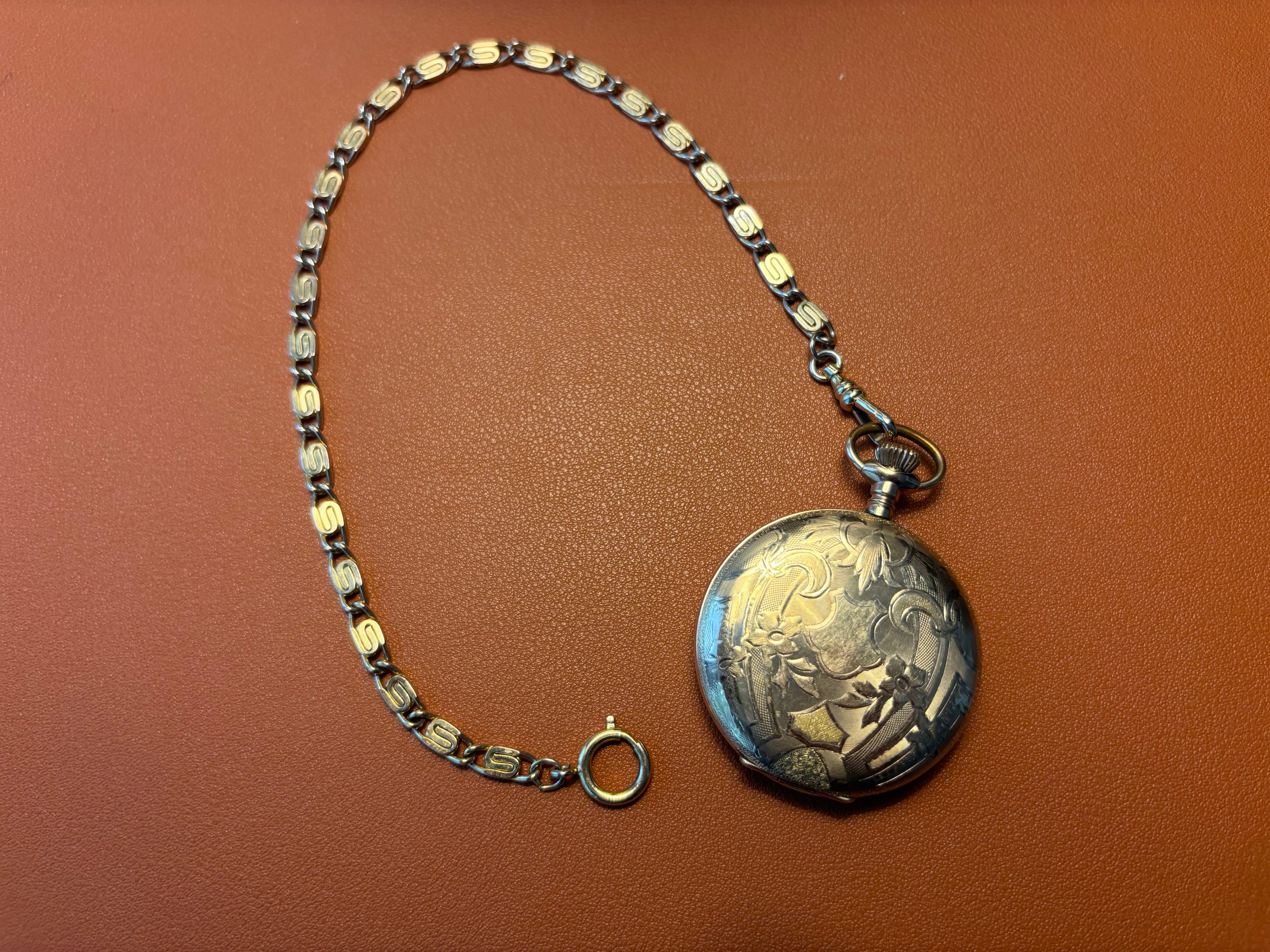
Maybe it’s worth something, but most likely its value is in its lineage. As it has passed from generation to generation, its value as a way to keep accurate time has diminished as technology has improved. Yet its personal value has increased—deepened, enriched, seasoned.
A pocket watch, especially this watch, seemed fitting for a reflection about time.
A watch notes the passing of seconds, minutes, and hours. Its ancestors were water clocks and sundials, just as the atomic clock is its descendant.
The historian Daniel Boorstin tells the fascinating story of how human beings learned to measure time. For most of history, people told time by the sun, the moon, the seasons, and the rhythms of communal life. Then we invented clocks and calendars of astonishing precision.
Yet who reading this feels they have mastered time?
The busyness of contemporary life and how to control it has been the stuff of bestselling books and time-management systems. But perhaps the most important questions are not whether we know what time it is, or how much time until retirement, the next meeting, or the project deadline.
Perhaps the deeper question is whether we know what makes our time meaningful.
My pocket watch can tell me what time it is.
It cannot tell me what this time is for.
The ancient Greeks used two words for time. Chronos is measured time.
Kairos is meaningful time. That is,
Time as a procession of moments. A moment of song. A moment of generosity. A moment of insight. A breath of wind or the smell of sage.
Emily Dickinson captured this mystery when she wrote,
“Forever is composed of Nows.”
Perhaps eternity is not only something coming.
Perhaps eternity is experienced in each of these present moments.
These moments are portals to something beyond ourselves—to eternity and infinity, to the fullness of time and to timelessness. Yet we almost always miss them because we are thinking about what comes next or what came before instead of experiencing now.
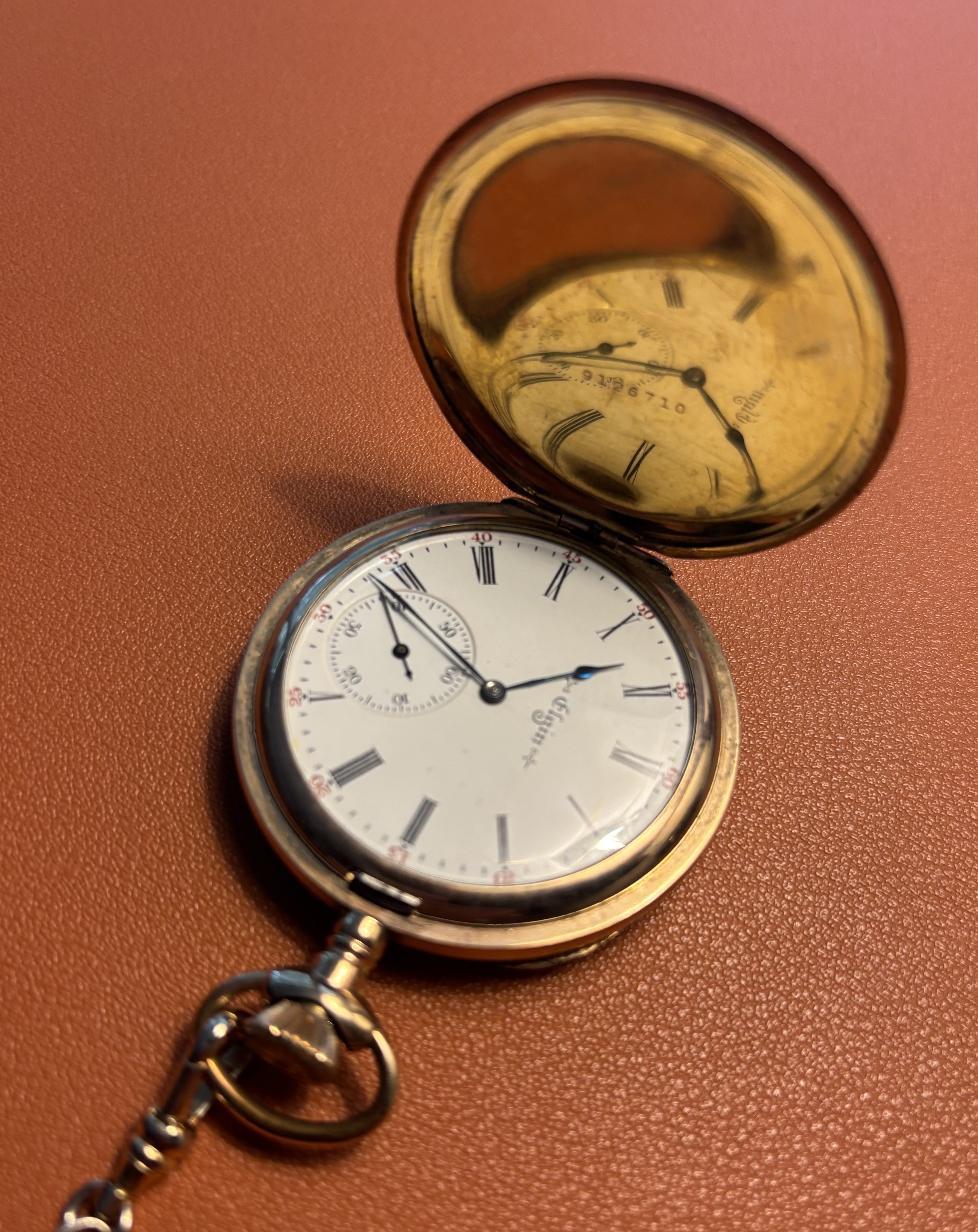
My watch measures Chronos.
But it also represents Kairos.
Holding this watch is the memory of my dad after open-heart surgery, my grandpa singing The Old Rugged Cross in the little white church just down the road from his Kansas farm, and the dream of my family, just two or three generations before, coming to America from Germany.
This watch is a timekeeper.
It measures minutes, hours, and years.
But it cannot tell me what those moments meant.
The soul is a timeskeeper.
The watch records how long.
The soul discerns how deep.
Part of the pilgrim’s journey is to experience The Way, on the way.
The pilgrim’s deepest journey is not across a landscape. It is into the heart.
Ecclesiastes proclaims,
“He has made everything beautiful in its time. He has also set eternity in the human heart; yet no one can fathom what God has done from beginning to end.”
Unfathomable.
The word fathom comes from measuring the depth of water. Sailors lowered a weighted line into the sea, and if it could not touch bottom, the depth was unfathomable.
A pilgrimage is not simply a physical path. It is also a spiritual path—a path toward wisdom, toward healthiness, toward deeper connection with others.
A pilgrimage can be measured in Chronos time:
“How long does it take to get there?”
Or in Kairos time:
“How deeply can we experience time?”
Wayfarers and sojourners move moment by moment through the deep time of the present presence, through “a forever composed of nows.”
But the timeskeeping is up to us.
As Judith Valente writes:
God, the Eternal
Pre-dawn silence
Earth murmurs ancient secrets
We listen, or not.
— Judith Valente, The Art of Pausing
I’d love to hear your thoughts about this essay.
Here are a couple of questions for you.
What in your life serves as a "pocket watch"—an ordinary object that carries extraordinary meaning? What gave it that significance for you?
What helps you slow down enough to notice the sacredness of an ordinary moment?
How might you live differently this week if you asked, "What is this time for?" instead of simply, "What time is it?"
Perhaps eternity is not only something coming.
Perhaps eternity is experienced in each of these present moments.